
Overview
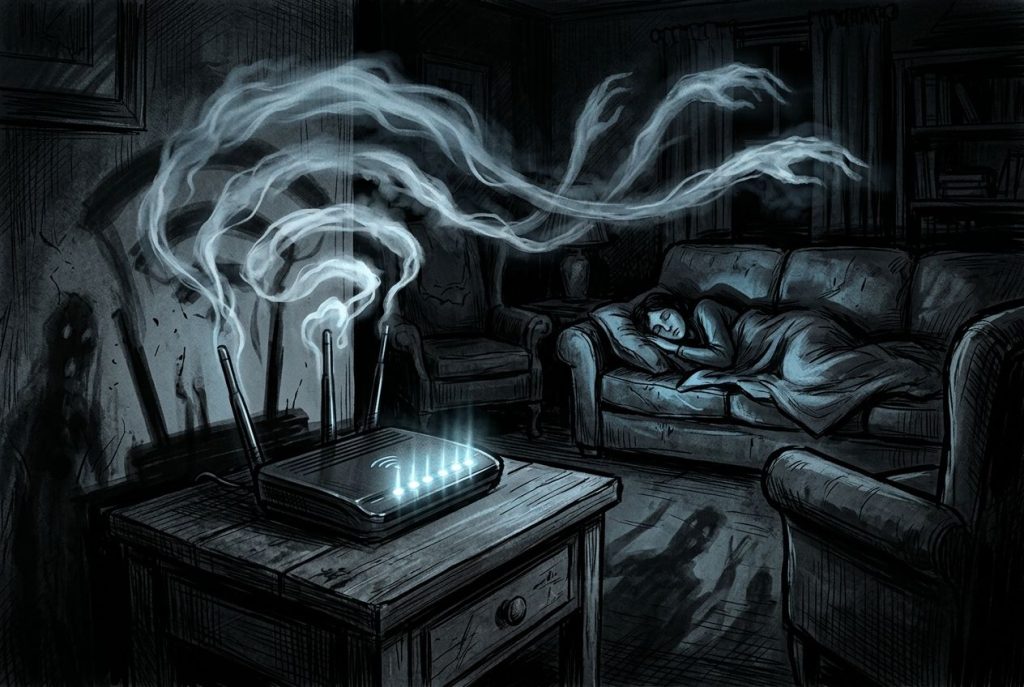
- The question of whether demons can use WiFi to enter a person’s life combines ancient theological concepts about spiritual beings with contemporary anxieties about digital technology and its effects on human moral and spiritual wellbeing.
- WiFi is a precisely defined physical technology that transmits data through non-ionising electromagnetic radio waves operating at 2.4 and 5 gigahertz frequencies, and it has no known mechanism by which disembodied spiritual entities could occupy or travel within it.
- Across Christian, Jewish, and Islamic theological traditions, demons are understood as non-material spiritual beings whose influence on human beings operates through the domain of the will, the mind, and moral choice rather than through physical transmission systems.
- The documented harms associated with digital technology, including exposure to violent and pornographic content, social isolation, addiction, radicalization, and psychological manipulation, are real and serious but are most accurately understood as human and structural problems rather than supernatural ones.
- Cognitive science offers a well-evidenced explanation for why humans instinctively attribute supernatural agency to technologies they find threatening or mysterious, a phenomenon rooted in the brain’s evolved tendency toward what researchers call hyperactive agency detection.
- A responsible and theologically grounded response to digital technology acknowledges both the genuine spiritual risks that the internet creates through human behaviour and the important distinction between metaphorical and literal claims about demonic activity in digital spaces.
What WiFi Actually Is: A Physical Technology
The question of whether demons can use WiFi requires, before anything else, a precise and accurate account of what WiFi actually is at the physical and technical level, because popular misunderstandings of the technology are a primary driver of the supernatural attributions attached to it. WiFi is a wireless networking technology that enables devices to communicate with each other and with the internet by transmitting data through electromagnetic radio waves. The electromagnetic spectrum is a continuous range of radiation types ordered by frequency, and it includes at its lower end radio waves, microwaves, infrared radiation, visible light, ultraviolet radiation, and at its higher end X-rays and gamma rays. WiFi operates in the radio wave and microwave portion of this spectrum, specifically at frequencies of either 2.4 gigahertz or 5 gigahertz, depending on the standard being used. A gigahertz is one billion oscillations per second, and the oscillation of electric and magnetic fields propagating outward from a transmitting antenna is what constitutes a radio wave. As The Conversation’s electrical engineering coverage explains, the alternating current in a WiFi antenna creates an oscillating electric and magnetic field that propagates outward through space as an electromagnetic wave, following the mathematical laws first described by James Clerk Maxwell in his famous equations of the 1860s. When this wave reaches a receiving device, the device’s antenna converts the oscillating electromagnetic field back into an alternating current, and the information encoded in the signal, typically by modulating the wave’s amplitude, frequency, or phase, is extracted and processed. WiFi signals carry packets of binary data, sequences of ones and zeros that represent the information being transmitted. The signal itself is entirely characterised by its physical properties: frequency, amplitude, phase, and polarisation. It contains no consciousness, no intention, no spiritual quality, and no capacity to carry or transmit anything other than the binary data for which it is designed. The non-ionising nature of WiFi radiation, confirmed by the US Environmental Protection Agency and Health Canada, means that WiFi signals lack the energy to break chemical bonds in human tissue, which distinguishes them sharply from ionising radiation such as X-rays and gamma rays. WiFi operates through the same category of physics as visible light, radio broadcasts, and mobile phone signals. Attributing supernatural properties to this technology requires a claim that lies entirely outside the domain of established physics.
What Demons Are: Theological Definitions Across Traditions
Having established what WiFi is, the second term in the question requires equally careful examination: what are demons, and how do the traditions that affirm their existence understand their nature, their capacities, and their mode of operation? The concept of demonic beings appears in the Abrahamic religions with significant variation in detail but considerable agreement on fundamentals. In Christian theology, demons are understood as fallen angels, spiritual beings who were created good by God but who, through an act of free rebellion, rejected God and were cast out of their original state. The most detailed biblical presentations of demonic activity appear in the synoptic Gospels, where Jesus is described as casting out demons who had taken possession of human beings, and in the epistles of Paul, particularly Ephesians 6:12, which describes the Christian’s struggle as being “not against flesh and blood, but against principalities, against powers, against the rulers of the darkness of this age, against spiritual hosts of wickedness in the heavenly places.” The key phrase in Paul’s formulation is “not against flesh and blood”: demonic opposition is explicitly contrasted with physical, material adversaries. In Jewish tradition, demons known as shedim appear in the Hebrew Bible and were further elaborated in rabbinic and Second Temple literature. The Jewish Virtual Library describes them as spiritual beings associated with desolate places and capable of afflicting human beings with illness and madness. In Islamic theology, the jinn are a category of non-human spiritual beings created from smokeless fire, distinct from angels, and capable of both good and evil, with the shaitan, identified with Iblis who refused to bow before Adam, representing the chief adversarial spiritual being. Across all three traditions, the defining characteristic of demonic beings is their non-material, spiritual nature. They are not composed of matter, they do not occupy physical space in the way that material objects do, and they do not interact with the physical world through mechanical or electromagnetic means. The Equip.org theological resource on demonology notes that “scripture teaches that demons are spiritual in nature, like angels.” The Christian tradition’s understanding, developed through centuries of patristic theology including the work of Origen, Augustine, and Aquinas, consistently holds that demonic influence on human beings operates through the intellect and the will, not through physical transmission.
The Theological Logic of How Demonic Influence Works
Understanding the classical theological account of how demonic influence actually operates is essential to evaluating whether WiFi could plausibly serve as a mechanism for it. The patristic and scholastic tradition, drawing on both biblical texts and philosophical reasoning, developed a detailed account of demonic activity that has important implications for the WiFi question. Augustine of Hippo, writing in the early fifth century, argued in “The City of God” that demons operate primarily through deception, tempting human beings to pursue false goods and turning their minds away from God toward inferior objects of attachment. Thomas Aquinas, in the Summa Theologica, provided a systematic account of how spiritual beings interact with the material world, arguing that angels and demons, being purely spiritual substances without bodies, cannot directly move physical objects or insert themselves into physical processes without special divine permission. Aquinas held that demonic influence on human beings operates primarily through the imagination and the passions, stimulating images, desires, and emotional states that incline the will toward sinful choices, without ever directly determining the will, which remains free. The Desert Fathers, particularly the writings attributed to Evagrius Ponticus in the fourth century, provided a highly developed psychological account of demonic temptation, identifying specific patterns of thought, known in Greek as logismoi, through which demonic influence presents itself: gluttony, lust, avarice, sadness, anger, acedia, vainglory, and pride. What is significant about this tradition is that it consistently locates demonic influence not in physical transmission but in the realm of mental and spiritual experience. Demons, in this account, exploit existing human vulnerabilities, desires, and moral weaknesses. They work through the human person’s interior life, suggesting thoughts and stimulating passions, not through external physical mechanisms. This is why the tradition consistently emphasises spiritual disciplines of prayer, scripture, fasting, and community as the primary defences against demonic influence: these practices address the interior domain where demonic activity is held to operate. A physical signal transmitted through electromagnetic radiation does not, on this account, constitute a vector for demonic activity in any theologically coherent sense.
Why the Question Arises: Technology and Supernatural Attribution
The specific formulation of the question, whether demons can use WiFi, is new, but the underlying dynamic it reflects is ancient and well-documented. Human beings have consistently attributed supernatural agency to new and poorly understood technologies, particularly communication technologies that seem to transmit invisible influences across space. The cognitive science of religion has studied this tendency extensively and identified a reliable mechanism behind it. Justin Barrett and Pascal Boyer, working in the tradition of cognitive science of religion, developed the concept of the Hyperactive Agency Detection Device (HADD): a cognitive tendency in human beings to over-attribute intentional agency to events and phenomena, particularly in ambiguous or threatening contexts. This tendency has clear evolutionary roots: in an environment where real predators and hostile human agents were genuine threats, it was safer to wrongly perceive intention in a random noise than to miss actual intention in a real threat. The system therefore has a low threshold for firing, generating false positives, and attributing purposeful agency to phenomena that are in fact caused by non-intentional physical processes. Research published in APA PsycNet in December 2024 found that priming people with religious and supernatural concepts significantly enhanced their tendency to attribute intentionality to natural phenomena. WiFi, as an invisible force that penetrates walls, enters the home, and enables communications that were previously impossible, is precisely the kind of phenomenon that activates agency-detection instincts. People cannot see, smell, or directly sense WiFi radiation, and its effects, enabling communication and information transmission across invisible channels, feel almost magical to many users who do not understand the physics. When that sense of mystery combines with a theological framework that includes invisible spiritual beings capable of influencing human minds, the attribution of demonic agency to WiFi becomes psychologically available and culturally plausible. This is not an irrational psychological process. It is a well-documented feature of how human cognition operates under conditions of uncertainty and perceived threat, and it has produced similar attributions throughout the history of communication technology.
The History of Technology and Supernatural Suspicion
The attribution of demonic or supernatural properties to WiFi follows a well-established pattern in the history of communication technology, and that history is directly relevant to assessing the current claim. The telegraph, introduced in the 1830s and 1840s, provoked significant supernatural anxiety in some communities. The ability to transmit messages nearly instantaneously across hundreds of miles through invisible electrical impulses seemed, to many contemporaries, to suggest supernatural forces at work. The telephone attracted similar suspicion when it was introduced, with some people expressing fear about disembodied voices entering the home through wires and others refusing to use it on grounds of religious principle. The radio, which transmitted human voices and music through the air without any physical connection, provoked responses in some religious communities that included concerns about the spiritual implications of receiving invisible transmissions in one’s home. Television was widely described in some evangelical communities as “the devil’s box” from its earliest introduction in the 1950s and has continued to attract supernatural attributions in various religious contexts ever since. The internet, introduced to mass public use in the 1990s, generated a substantial body of religious commentary about its spiritual dangers, including claims that it opened the home to demonic influence. Russian Orthodox Patriarch Kirill warned in 2019 that human dependency on smartphones could facilitate the coming of the Antichrist. Each of these attributions followed the same basic pattern: a new communication technology that introduces invisible transmissions into the home, enables access to information and people that were previously inaccessible, and operates through mechanisms that most users do not understand, attracts supernatural attributions that map the unknown onto existing religious categories for invisible influences. The progression from radio to television to the internet to WiFi is consistent: each technology was initially experienced as mysteriously powerful, attracted supernatural concern, became normalised, and eventually ceased to be the primary vehicle for such concerns as the next technology emerged to take its place.
Real Harms of the Digital Environment That Are Not Supernatural
The most important and practically useful response to the question of whether demons can use WiFi is not simply to dismiss concerns about the internet’s spiritual effects, but to redirect those concerns toward the genuine, evidence-based harms that digital technology creates through entirely human and structural mechanisms. These harms are serious, well-documented, and deserve sustained attention from religious communities, mental health professionals, educators, and policymakers. Social media platforms, accessible primarily through WiFi-connected devices, have been shown in multiple peer-reviewed studies to correlate significantly with depression, anxiety, loneliness, and suicidal ideation, particularly among adolescents. A 2023 review published in the National Institutes of Health’s PMC database found that smartphone and social media use among teenagers is associated with increases in mental distress and self-harming behaviours. A report from the Surgeon General of the United States, published as an advisory, flagged widespread excessive social media use as a public health concern requiring urgent action. The architectural design of social media platforms, including algorithmically curated feeds optimised for maximum engagement rather than human wellbeing, creates conditions that exploit psychological vulnerabilities in ways that are remarkably consistent with what the Christian spiritual tradition calls temptations: they stimulate envy through social comparison, feed vainglory through the pursuit of likes and followers, cultivate acedia through passive consumption, and generate anger through the algorithmic amplification of outrage. A 2024 Barna Group study found that over half of practicing Christians reported consuming pornography with some regularity, with internet accessibility identified as a primary driver of this exposure. Online radicalization, documented in detailed studies by institutions including the Soufan Center and the Royal United Services Institute, has drawn large numbers of young people into violent extremist movements through algorithmically facilitated exposure to escalating content. These are profound and concrete harms. They do not require a supernatural explanation to be spiritually serious, because they represent the exploitation of human moral vulnerabilities at an industrial scale.
The Metaphorical and the Literal in Religious Language About Technology
A significant source of confusion in discussions about demons and WiFi is the failure to distinguish carefully between metaphorical and literal uses of religious language when applied to technology. Religious communities routinely and legitimately use the language of spiritual warfare, temptation, and demonic influence in a metaphorical or analogical sense that captures genuine spiritual realities without making specific empirical claims about the physical mechanism of those realities. When a pastor says that “the internet is a tool of the enemy,” the statement can be understood metaphorically to mean that the internet creates conditions that make certain sins easier to commit and certain virtues harder to maintain, a claim that is empirically defensible. It does not necessarily mean that demons are literally riding along WiFi signals like passengers on a bus. The tradition of spiritual warfare language in Christianity goes back to Paul’s Ephesians 6 passage about the armour of God, which uses clearly military metaphors to describe the interior struggle against sinful inclinations and external temptations. The Desert Fathers used personalised language about specific demons of gluttony, lust, and pride in a way that modern readers often take more literally than the monastic tradition may have intended, since many scholars of patristic spirituality argue that these figures were understood as personifications of psychological states and moral tendencies as much as literal individual spiritual beings. The question of how literally to interpret spiritual warfare language is a live and contested one within Christian theology, with positions ranging from full literalism, in which individual named demons are understood as real personal beings actively targeting specific individuals, to functionalist or existentialist interpretations, in which demonic language describes the experience of being overwhelmed by forces of moral corruption that seem greater than the individual will. What matters for the practical question of how to engage with digital technology is that both interpretations lead to essentially the same practical response: cultivating the interior disciplines of prayer, attention, and moral discernment that protect the human person from being overwhelmed by temptation, regardless of its ultimate metaphysical origin.
What Theology Actually Says About Technology and Spiritual Life
The mainstream theological traditions, when they address digital technology directly, tend to focus their concerns not on the physical properties of WiFi signals but on the human moral choices, institutional practices, and social conditions that digital technology enables and amplifies. The Catholic Church’s social teaching, articulated through a series of documents on social communication including “Inter Mirifica” (1963), “Communio et Progressio” (1971), and more recent statements, consistently holds that communications technologies are morally neutral instruments that can be used for good or ill depending on the choices of the humans who deploy them. Pope Francis, in his 2019 apostolic exhortation “Christus Vivit,” addressed young people’s relationship with digital technology directly, warning against loneliness, alienation, and the replacement of authentic relationships with digital substitutes, but framing these concerns in terms of human choices and social conditions rather than demonic occupation of digital infrastructure. The Protestant tradition’s engagement with technology, represented in thoughtful treatments from scholars including Neil Postman, who argued in “Amusing Ourselves to Death” that television restructures human consciousness in ways that undermine the capacity for serious thought, and Jacques Ellul, who in “The Technological Society” argued that technique as a system tends to subordinate human ends to its own logic, is primarily concerned with the structural and anthropological effects of technology on human character and community rather than with supernatural mechanisms. The Orthodox Christian tradition, perhaps the most traditional in its language about spiritual warfare and demonic activity, has expressed concerns about digital technology primarily in terms of its effects on prayer, fasting, community, and the interior life. Holy Trinity Orthodox Seminary’s 2025 analysis of AI’s effects on Orthodox Christian practice focused on the ways technology substitutes convenience for the demanding practices that shape spiritual character, not on the mechanics of wireless signal transmission. These traditions, taken together, provide a rich body of resources for engaging digital technology seriously and critically without requiring the specific empirical claim that demons travel via radio waves.
The Psychological Reality Behind the Question
While the literal claim that demons use WiFi lacks both theological and scientific support, the psychological experience that drives people to ask the question is genuine and deserves sympathetic and accurate analysis. Many people report that their engagement with the internet, particularly with social media, pornographic content, online gambling, or conspiracy communities, produces experiences that feel, from the inside, like a kind of possession or compulsion: a loss of control, a sense that something outside themselves is driving their behaviour, an inability to stop despite genuine and repeated attempts to do so. These experiences are real, and dismissing them as mere metaphor would be to miss something important about the actual phenomenology of addiction and compulsive behaviour. Research in psychology and neuroscience has documented the mechanisms through which social media platforms and other digital technologies exploit the brain’s dopaminergic reward system, creating patterns of compulsive engagement that have structural similarities to substance addiction. The design of algorithmically curated feeds, which continuously present novel and emotionally stimulating content and reward engagement through social feedback in the form of likes and comments, produces a pattern of stimulus-seeking behaviour that many users find genuinely difficult to control through conscious willpower alone. The experience of having one’s attention, time, and emotional life colonised by digital content to a degree that feels beyond voluntary control is precisely the kind of experience that maps onto traditional religious language about temptation, captivity, and demonic influence. This mapping is not merely metaphorical in a trivial sense. It reflects genuine insight about the limits of individual willpower in the face of sophisticated, intentionally addictive systems. The theological tradition’s insistence that deliverance from such captivity requires resources beyond individual moral effort, including community, accountability, prayer, and grace, is practically validated by the research showing that recovery from internet addiction and compulsive social media use is most effective when it incorporates social support and structured spiritual or psychological accountability.
The Structural Evil Embedded in Digital Systems
One of the most theologically serious responses to the question of demonic activity and digital technology moves beyond the literal question of WiFi signals to engage with the concept of structural or systemic evil that the prophetic tradition in Christianity and Judaism has always recognised as a distinct category of moral concern. The prophetic writings of the Hebrew Bible were concerned not only with individual sins but with the moral character of social, economic, and political systems that institutionalised injustice and made it difficult for individuals to choose otherwise. The New Testament’s language about “principalities and powers” in the letters of Paul, particularly in Romans 8:38, Colossians 2:15, and Ephesians 6:12, has been interpreted by theologians including Walter Wink in his three-volume series on “The Powers” as referring not only to literal supernatural beings but to institutional and structural realities, the ideological and systemic dimensions of social organisations that take on a life of their own and operate in ways that are resistant to individual moral correction. Wink’s interpretation, whatever one thinks of its metaphysics, identifies something genuinely important: the digital ecosystem, taken as a system, exhibits characteristics that the theological tradition associates with powers hostile to human flourishing. The algorithmic amplification of outrage and division, the systematic exploitation of psychological vulnerabilities for commercial profit, the erosion of privacy as a structural feature of the business model rather than an incidental side effect, the design of systems that deliberately create addictive usage patterns: these are not random outcomes of neutral technology. They are the products of specific choices made by specific institutions and individuals for specific economic reasons. They constitute a kind of institutionalised harm that operates at a scale and with an intentionality that justifies the application of serious moral and theological categories, even if “demons in the WiFi” is not the most analytically precise formulation of what is actually occurring.
The Question of Demonic Activity in a Digital Age: Grounded Responses
Having examined the question from multiple angles, including the physics of WiFi, the theology of demonic beings, the psychology of supernatural attribution, the genuine harms of digital technology, and the structural dimensions of the digital ecosystem, it is possible to articulate a grounded and practically useful set of responses that take seriously both the spiritual concerns behind the question and the importance of accuracy in how those concerns are framed. The first grounded response is a clear statement of what is theologically and scientifically supportable: demons, if they exist as the theological traditions affirm, are non-material spiritual beings whose influence on human beings operates through the will and the intellect, not through electromagnetic signal transmission. WiFi is a physical technology that carries binary data via radio waves and has no known mechanism for carrying spiritual entities or their influence. The claim that demons use WiFi as a transmission medium is therefore not supported by either the theological tradition or the physics of electromagnetic radiation. The second grounded response is an equally clear acknowledgment that digital technology creates genuine conditions in which human moral and spiritual vulnerabilities are systematically exploited: through addiction mechanisms, through exposure to morally harmful content, through the social comparison dynamics of social media, through the radicalization pathways documented in extremism research, and through the substitution of shallow digital interaction for the depth of face-to-face community and relationship. These conditions are spiritually serious in every sense that matters practically. The third grounded response is the recognition that the appropriate tools for addressing these conditions are those the tradition has always recommended: prayer, fasting, accountability, community, the cultivation of interior attention, and the structural wisdom to place deliberate limits on technologies that demonstrably undermine human flourishing. These responses are more specific, more actionable, and more consistent with both good theology and good evidence than the claim that demons ride WiFi waves, and they are therefore more genuinely useful to the individuals and communities that face the real challenges of living faithfully in a digital world.
A Final Assessment: Separating Fear From Wisdom
The question of whether demons can use WiFi to enter a person’s life is, at its most literal level, one that neither the theological tradition nor the physical sciences supports in the affirmative. WiFi is a physical medium for data transmission that has no capacity to carry spiritual beings or their influence, and the classical theological account of demonic activity does not posit a mechanism that would involve the occupation of electromagnetic signals. At the same time, the question reflects real and legitimate concerns about the spiritual effects of digital technology that deserve serious engagement rather than dismissal. The internet and the devices and networks that deliver it have become the primary environment in which billions of human beings spend their attention, form their habits, shape their desires, receive their information, and conduct their relationships. That environment has been shaped by powerful institutional interests that prioritised engagement, addiction, and data extraction over human wellbeing and dignity. The documented effects of that environment on human mental health, moral character, and community life are serious and well-evidenced. They are spiritual problems in the most substantive sense of that term, even if their mechanism is psychological and structural rather than supernatural. The wisdom tradition of every major religion has always insisted that the path to spiritual health requires deliberate management of the environment in which human beings form their habits and desires, because what we habitually attend to shapes what we become. The Desert Fathers retreated from the cities of the Roman Empire partly because they judged those cities to be environments in which certain vices were so ambient and so structurally reinforced that they made the cultivation of virtue extremely difficult. The relevant question for communities navigating the digital age is not “are there demons in the WiFi?” but rather “is this digital environment one in which the habits, virtues, and relationships that constitute a good human life can flourish?” That question is urgent, evidence-based, and practically important, and it deserves the most serious engagement that both the theological tradition and contemporary social science can bring to bear upon it.
Disclaimer: This article is for informational purposes only and should not be considered professional advice. Please consult with qualified professionals regarding your specific situation. For questions, contact info@gadel.info